
Global Energy Markets & Commodity Shocks Amid US/IRAN War
BLOGS
7/8/2026


The $100 Barrel: How the Strait of Hormuz Crisis is Reshaping Global Energy
When 20% of global oil and liquefied natural gas (LNG) vanishes from the maritime grid overnight, the entire world feels the economic shockwave. The recent breakdown of US-Iran diplomatic channels has done exactly that, transforming a localized political standoff into an immediate global market crisis.
With Brent Crude tearing past key resistance levels and maritime logistics in chaos, here is a breakdown of why this energy bottleneck is happening, how trade routes are shifting, and what it actually means for your wallet.
1. The Spark: Why Brent Crude is Soaring
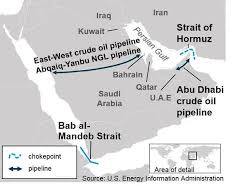
The Persian Gulf is home to the world’s most critical energy chokepoint: The Strait of Hormuz. At its narrowest, the shipping lanes are only two miles wide, yet they handle roughly 21 million barrels of oil per day alongside a massive share of the world’s LNG.
[Persian Gulf] ───► [Strait of Hormuz] (Chokepoint) ───► [Global Markets] (Military Risks /Insurance Spikes)
As geopolitical friction between Washington and Tehran spiked, the immediate reaction on Wall Street and the London ICE was a textbook geopolitical risk premium. Energy traders aren't just reacting to actual supply cuts; they are pricing in the probability of future disruptions. Within hours of the diplomatic breakdown, Brent Crude and WTI futures surged, driven by a scramble for defensive energy assets.
2. The Tanker U-Turn: Reshaping Global Trade Routes
The crisis isn't just about production; it’s a massive logistical nightmare. Commercial shipping in the region has been forced into emergency protocol due to two main factors:
War-Risk Insurance Premiums: Marine insurers have spiked premiums for transiting the Gulf by up to 1,000%, making it financially restrictive for standard tankers to enter.
The Rerouting Reality: Dozens of ultra-large crude carriers (ULCCs) and LNG vessels have actively executed mid-voyage U-turns.
Instead of taking the short route through the Suez Canal to reach Europe and the US, ships are being forced to navigate around the Cape of Good Hope at the southern tip of Africa. This rerouting adds roughly 10 to 14 days to a single transit, instantly tying up global shipping capacity, spiking maritime diesel costs, and creating a structural delay in the global energy supply chain.
3. The Downstream Squeeze: What This Means for Your Wallet
While institutional investors track futures tickers, ordinary consumers bear the downstream brunt of the shock wave. A sustained energy bottleneck triggers a domino effect across the broader economy:
Retail Fuel and Home Energy Spikes
The most immediate impact hits the pump. Higher crude prices translate to a direct surge in gasoline and diesel costs within days. For European and UK audiences, the parallel surge in LNG prices hits utility bills directly, as natural gas remains a primary driver for electricity generation.


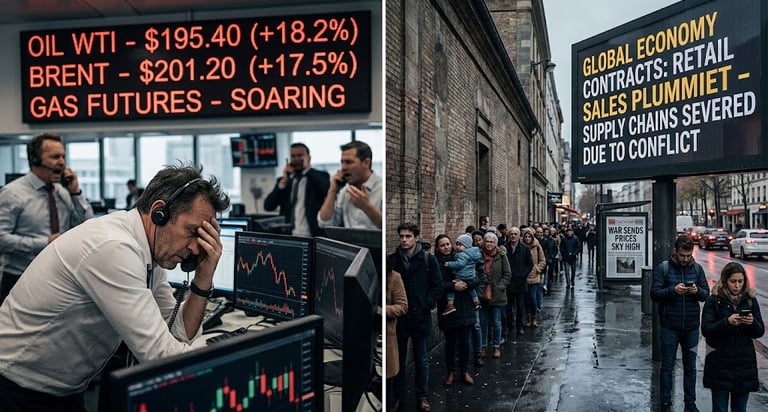
The Anatomy of a Geopolitical Energy Shock: How the US-Iran War is Fracturing Global Markets
The conflict has triggered what the International Energy Agency (IEA) has classified as the largest supply disruption in the history of the global oil market. The near-total blockade of the Strait of Hormuz has created a cascading multi-commodity contagion, echoing the severe stagflation crises of the 1970s.
1. The Global Macro Downgrade: Growth vs. Inflation
The International Monetary Fund (IMF) recently downgraded its 2026 global economic growth forecast to a sluggish 3.0% (down from 3.5% in 2025). The shock has stalled years of hard-fought progress against inflation.
[Hormuz Blockade] ───► [32% Oil Price Surge] ───► [Global Inflation Hits 4.7%] ───► [Central Bank Rate Hikes]
The Sticker Shock: Global energy prices are projected to average a 32% increase across 2026. This has pushed global consumer inflation up to 4.7%, forcing central banks to halt planned interest rate cuts.
The Economic Multiplier: Econometric models show an aggregate global amplification multiplier of $3.20 in GDP losses for every $1 of chokepoint disruption.
Asymmetric Insulation: The US economy remains somewhat insulated—growing at a projected 2.3%—thanks to robust domestic shale production and a booming tech sector fueled by artificial intelligence investments. However, net energy-importing regions are facing severe fiscal strain.
2. The European Industrial Crisis & The LNG Freeze
While crude oil dominates the headlines, the crisis in liquefied natural gas (LNG) is quietly reshaping European industry. Following the disruption in the Gulf, QatarEnergy was forced to declare force majeure on all exports, hitting Europe at its weakest point.
The Storage Depletion: The maritime blockade coincided with historically low European gas storage levels, which sat at just 30% capacity following a harsh winter.
Pricing Spikes: This supply vacuum caused Dutch TTF gas benchmarks (the European standard) to nearly double, passing €60/MWh.
The Threat of Permanent Deindustrialization: In the UK and EU, heavy chemical, steel, and fertilizer manufacturers have been forced to implement emergency surcharges of up to 30% just to cover electricity and feedstock costs. Analysts warn that prolonged exposure to these input costs could cause structural, permanent deindustrialization across Western Europe.
3. The Supply Chain "Trilemma" and Freight Bottlenecks
For global logistics managers, the conflict has completely shattered supply chain stability. The Federal Reserve Bank of New York’s Global Supply Chain Pressures Index experienced its largest single-month jump since the March 2020 COVID-19 lockdowns, surging past 1.82.
Logistics firms are now caught in an aggressive Supply Chain Trilemma, forced to optimize for only two of three factors:
DimensionThe Current Crisis RealityCost ControlShattered. Jet fuel costs spiked over 56% in a single month, pushing budget carriers like Spirit Airlines to cease operations entirely, while major legacy lines have signaled 15–20% fare hikes.Service ReliabilityCompromised. Rerouting around Africa adds 10 to 14 days to standard maritime transit, creating massive inventory lag times.SustainabilityAbandoned. The massive detours and reliance on inefficient backup shipping lanes have caused a major spike in carbon output per ton of freight moved.
4. The Hidden Catalyst: Food Security & The Fertilizer Crunch
The most dangerous downstream effect of the US-Iran war isn't happening at the gas pump; it is happening in agriculture. The Persian Gulf is the primary source for roughly 30% of the world’s internationally traded urea and ammonia—the essential building blocks for global fertilizers.
The Crop Yield Threat: Natural gas is the primary feedstock for nitrogen-based fertilizers. With LNG missing from the market and regional infrastructure damaged, global fertilizer prices have skyrocketed.
The Import Crisis: The crisis hit home immediately for the Gulf Cooperation Council (GCC) states. These nations rely on the Strait of Hormuz for over 80% of their food intake. Within weeks of the blockade, 70% of the region's food imports were disrupted, forcing unprecedented emergency airlifts of basic grocery staples and causing local supermarket price hikes ranging from 40% to 120%.
The Structural Shift: Beyond immediate financial volatility, this conflict marks the "end of an era" for global trade dynamics. The narrative that the Middle East Gulf is a permanently stable, safe haven for expatriate labor, foreign direct investment (FDI), and luxury tourism has been deeply shaken. Investors are now permanently pricing in a structurally higher geopolitical risk premium across all asset classes.
© 2026. All rights reserved.
Contacts:
info@karobardirectory.com